
Home earwax removal: the complete guide
This is the central guide on the directory to managing earwax at home. It covers softening drops, bulb syringe kits, what not to use, when to escalate to a professional, and how to think about home methods sensibly. Earwax removal is one area where what you do not do matters as much as what you do.
Find a professional clinicKey takeaways
| Point | Detail |
|---|---|
| Softening drops are usually safe | Olive oil, almond oil, or sodium bicarbonate drops are recommended by most clinicians as a first step, including before a professional visit. |
| Home bulb syringes can work | For mild, soft, recurrent wax in a healthy adult canal - used over a sink, with body-warm water, after several days of softening. |
| Some things are clearly out | Cotton buds, hairpins, ear candles, hydrogen peroxide for prolonged use, and any sharp implement. Each has documented harm. |
| Know when to escalate | Pain, dizziness, discharge, sudden hearing change, or any history of perforation or surgery - book a professional appointment. |
Verify a practitioner via these UK registers and professional bodies


Each clinic profile shows you which register or professional body the listed practitioner is on.
CQC registration is required for any clinic offering earwax removal to people under 19, outside of a school or academy setting.
The icons above are non-official verification marks. They do not imply endorsement by any regulator or professional body.
The first step for everyone: softening drops
Softening drops are the foundation of any home approach to earwax. They are also what most professional clinics recommend you use for two to three days before an appointment, so even if you intend to see a practitioner, this step is worth doing first.
The drops do not remove the wax. They soften it. Softer wax migrates out of the canal more easily on its own and is much easier for any subsequent flushing or professional procedure to clear. Most clinicians consider this the safest step a patient can take at home, regardless of what comes next.
Olive oil
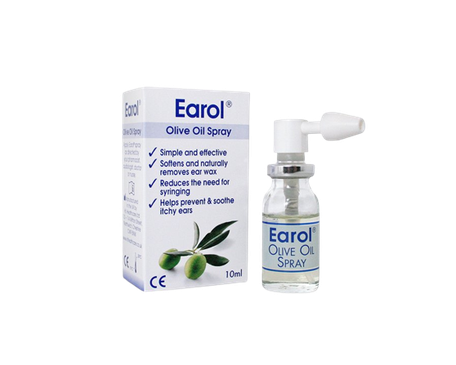
The most common recommendation, available in small dropper bottles at any pharmacy. Warm the bottle gently between the hands first - cold oil entering the ear can cause brief mild dizziness. Two or three drops, two or three times a day, for three to five days. Lie on your side for ten minutes after each application so the oil reaches the wax. Olive oil suits almost all ears and has the longest track record in clinical practice.
Almond oil
An alternative to olive oil with very similar properties. Patients sometimes prefer almond oil for its milder smell. Do not use almond oil if you have a nut allergy.
Sodium bicarbonate ear drops
Available over the counter and effective for firmer wax. The mechanism is slightly different from oil - sodium bicarbonate solution disrupts the wax structure as well as softening it. Use as directed on the package, typically twice a day for five to seven days. May cause more sensation in the canal than oil, which is normal.
Hydrogen peroxide drops
Available in dilute form in some over-the-counter ear drops. Can be effective but should not be used for longer than the product label suggests. Prolonged or repeated use can cause maceration of the canal lining. If a short course does not soften the wax, escalate to a clinician rather than continuing.
Home flushing with a bulb syringe
If softening drops alone have not cleared the wax, and you fit the conditions described in our page on home earwax removal kits, a home syringe is a reasonable next step. The kit-specific technique is covered in below; the principles are set out here.
A home syringe delivers a low-pressure stream of warm water into the canal. The aim is to direct the stream along the upper rear wall of the canal so that the water passes behind the wax and pushes it out, not at the wax itself, which packs it inwards. The water must be at body temperature - cold or hot water stimulates the inner ear's balance organ and causes dizziness.
Home flushing is appropriate only for healthy ears with mild, softened wax in an adult. The list of conditions in which it should not be used is on the dedicated home kit page; it overlaps almost completely with the conditions in which a clinician would also avoid water-based ear irrigation. For deeper detail on the FAQ for syringe kits, see our syringe kit FAQ, and for a side-by-side comparison with professional care see our home syringe kit vs professional care page.
What not to use - and why
Some home approaches have either no evidence of benefit, clear evidence of harm, or both. The following are out, regardless of how widely they may be marketed or recommended.
Cotton buds
The instruction on every box of cotton buds in the UK is some version of "do not insert into the ear canal" - and that instruction is correct. Cotton buds push wax further into the canal, pack it against the eardrum, and can scratch the canal lining. The visible wax that comes out on the bud is wax that was already at the entrance. The bigger problem is the wax left behind, which is now firmer, deeper, and harder to clear.
Hairpins, paperclips, ear picks, and any rigid implement
The canal lining is thin, the eardrum is thinner, and the distance is short. Inserted instruments are the largest documented source of self-inflicted ear injuries seen in UK emergency departments and ENT clinics. A few seconds of bad judgement can cause perforations that take months to heal or do not heal at all.
Ear candles
Ear candling has no documented benefit and well-documented risks - burns to the face and outer ear, candle wax dripping into the canal, hearing loss, and canal injury. The "wax" produced after a candling session is candle residue, not ear wax. The Cochrane review, the FDA, and ENT UK have all formally advised against the practice. For the full evidence summary, see our page on whether ear candles work.
Sharp ear picks marketed online
Online retailers sell metal ear picks, often described as "Japanese" or "professional". These are not professional instruments - they are ornaments. Professional ear curettes are blunt, sized to the canal, used under direct vision through an otoscope, and held with hand stability built up over years of training. The sharp metal sticks sold for home use match none of those conditions.
When to escalate to a professional
Home methods are reasonable starting points for a defined set of situations. Outside those situations, professional care is the safer answer. The following are all reasons to stop home attempts and book an appointment.
- Symptoms in addition to blocked hearing - pain, dizziness, ringing, discharge, sudden hearing change, or fever
- A history that complicates the picture - eardrum perforation (healed or active), grommets, ear surgery, frequent infections, or skin conditions affecting the ear canal
- Age extremes - children under 12 and frail older adults are situations for professional care rather than home methods
- Home methods have not worked after a fair trial - typically several days of softening followed by careful flushing
- The wax has been there for more than a few weeks - longstanding wax tends to dry out and harden, putting it beyond what a home kit can comfortably shift
- Uncertainty - if you are not sure whether your situation is one a home kit is designed for, treat that as a signal to book rather than to guess
A professional appointment gives you access to all three of the recognised methods - microsuction, ear irrigation, and manual removal - and a trained practitioner choosing between them based on what they actually see in your canal. That combination is what a home kit cannot match.
How to think about home methods sensibly
The reasonable position on home earwax removal sits between two extremes. One extreme says everyone should always see a professional for any wax problem, which is unnecessarily restrictive and not how most clinicians actually advise their patients. The other extreme says home methods are always fine, which ignores the genuine limits of what a person can safely do to their own ears.
Most clinicians' actual position is closer to this: soften the wax with drops first; if you are an adult with a healthy ear and the situation is straightforward, a careful home flush can be a reasonable next step; if there is any complicating factor or any worsening, see a professional; and if you find yourself doing this repeatedly, see a clinician who can investigate why your ears produce wax that builds up so quickly.
The directory exists for the situations where professional care is the right answer. The page you are on exists because the home methods question is real and people deserve an honest set of answers about it, not a sales pitch in either direction.
How to Safely Use an Ear Wax Removal Kit
Step 1: Soften the earwax
Before using your ear wax removal kit or ear syringe kit, it's essential to soften the earwax. To do this, use a few earwax drops of warm olive oil from a spay dispenser such as Earol. Gently tilt your head to one side and apply the drops, allowing them to sit in the ear canal for about 5-10 minutes. This will help break down and soften the earwax, making it far easier to remove.
Step 2: Prepare the ear syringe
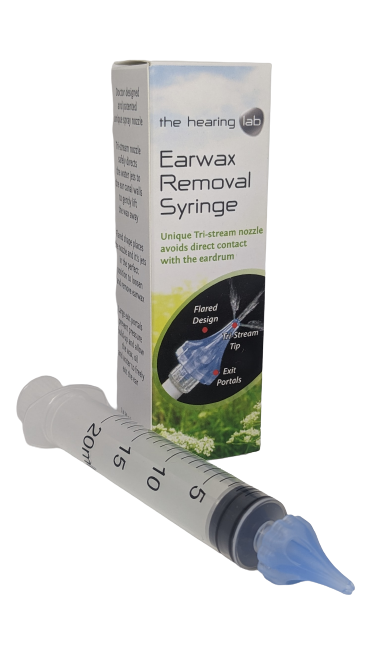
Fill the ear syringe or bulb with warm water. Be sure to use water that is close to body temperature to avoid dizziness or discomfort.
Step 3: Position yourself correctly
Stand or sit in front of a sink or basin to catch any water and earwax that is flushed out during the process. Tilt your head slightly to one side, with the ear you're treating facing the sink.
Step 4: Irrigate the Ear
Insert the tip of the ear syringe gently into your ear canal, taking care not to push it too deep. Slowly and gently push the plunger or squeeze the bulb, allowing the water to flow into your ear. The water will help flush out the softened earwax.
Step 5: Drain and dry
After irrigating your ear, tilt your head to the opposite side to allow the water and earwax to drain out. Gently pat your outer ear with a soft, clean towel to dry it. Repeat the process on the other ear if necessary.
Step 6: Clean the ear syringe
After completing the earwax removal process, thoroughly clean and sanitise the ear syringe, bulb, or other type of ear cleaner according to the manufacturer's instructions. This will ensure that it remains hygienic and ready for future use.
Frequently asked questions
Is it safe to remove earwax at home?
For an adult with mild, soft, recurrent wax and a healthy canal, using softening drops and a low-pressure bulb syringe carefully, yes - within limits. For anyone with a history of perforation, grommets, infections, pain, dizziness, or any uncertainty about the situation, no. The safety question depends almost entirely on which situation applies to you.
What is the best home remedy for earwax?
Softening drops - olive oil, almond oil, or sodium bicarbonate - used for two to three days. This alone is enough for many cases of mild wax build-up. The wax softens, migrates out, and the ear self-clears. Beyond that, a careful bulb syringe flush is the next step for appropriate cases, with the caveats covered above.
Do ear candles remove wax?
No. Ear candles have no documented benefit and are formally advised against by ENT UK, the FDA, and the Cochrane review. The residue produced is candle wax, not ear wax. See our dedicated page on whether ear candles work for the full evidence summary.
Why are cotton buds bad if everyone seems to use them?
They feel like they are working because the visible wax at the entrance to the canal comes out on the bud. What they are also doing - and what you cannot see - is packing the deeper wax tighter and deeper, scratching the canal lining, and occasionally pushing material against the eardrum. The wax that comes out on the bud is the easy bit. The cost is the harder bit being made harder still.
How often is too often for home flushing?
If you are flushing more than every few weeks, you have crossed from problem-solving into routine maintenance, and that is the point at which a clinician should be involved. Frequent wax build-up can have causes worth identifying - skin conditions, narrow canals, hearing aid use - and a professional can usually find one and recommend a more sustainable approach.
Should I see a professional even if home methods have worked for me before?
If everything is going well, no - past success with appropriate home methods is reasonable evidence that home methods suit your particular ears. The reasons to book a professional appointment despite a history of successful home use are the same ones in the list above: new symptoms, slow worsening, or anything that makes you uncertain. The pattern matters less than the current situation.
If home methods are not enough, find a clinic
Every listing on our directory shows the practitioner's professional background, registration, methods offered and indicative pricing. Search by postcode to see who is available locally.
Find a clinicReferences
- National Institute for Health and Care Excellence (NICE). Hearing loss in adults: assessment and management. NG98, 2018.
- National Institute for Health and Care Excellence (NICE). Earwax: Clinical Knowledge Summary.
- ENT UK. Position statement on the use of ear candles, 2023.
- Cochrane Library. Review of interventions for cerumen impaction.
- Royal National Institute for Deaf People (RNID). Ear care research and access campaign, 2025.